‘Miss Kitty, have you ever thought of runnin’ away?
Settlin’ down, would you marry me
If I asked you twice and begged you, pretty please?’
She’d have said, ‘Yes’, in a New York minute
They never tied the knot, his heart wasn’t in it
He just stole a kiss as he rode away
He never hung his hat up at Kitty’s place” – Should’ve Been a Cowboy (Toby Keith) © Universal Music
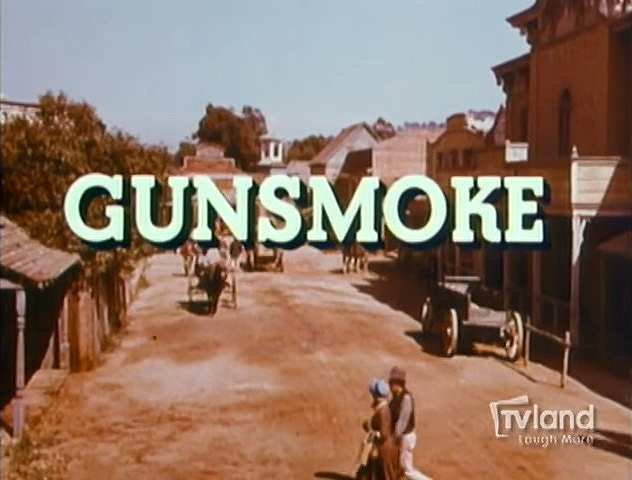
While Matthew Dillon may have been reluctant to verbalize his affection for Miss Kitty Russell, one phrase that was no stranger to his lips was, “Get outta Dodge!” – a command that he surely uttered dozens, maybe even hundreds of times, during the twenty-three years that the series Gunsmoke was broadcast on radio and television. For as the head lawman in the town of Dodge City, Kansas, Marshal Dillon plainly viewed his role as peacekeeper more seriously than he did any impulsive ideas of long-term romance.
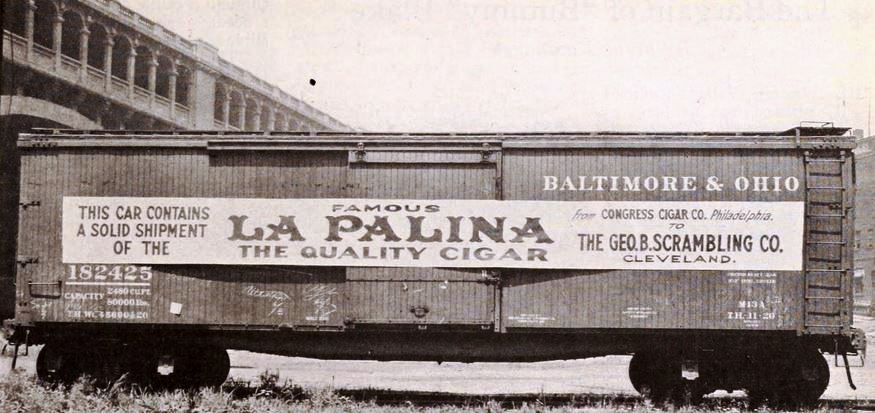
In 1927, Samuel Paley – a Jewish immigrant and father of William S. Paley – along with several partners, purchased a struggling Philadelphia-based radio network of 16 stations called the Columbia Phonographic Broadcasting System. Paley’s idea was to primarily use the stations as a broadcasting medium to promote his family’s already successful cigar company.
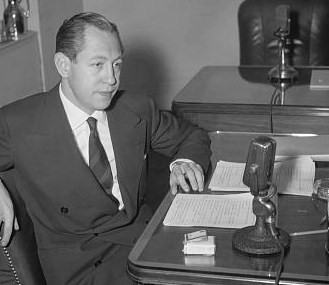
William, a graduate of the Wharton School, was able to double cigar sales within a year, giving his family the ability to buy out their partners in the broadcasting network. He soon realized that success in broadcasting would come about through quality programming, understanding that superior content was key in attracting advertisers and sponsors, and would allow the network to charge more for ad time. Within a decade William S. Paley had expanded the Columbia network to 114 stations.
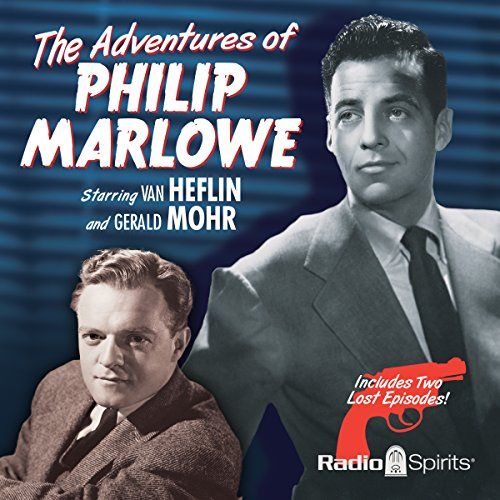
William Paley was a fan of the Phillip Marlowe radio series, and the genre of “hardboiled” detective fiction. In the late 1940s, he asked his programming chief to develop a hardboiled Western series, something he characterized as a “Philip Marlowe of the Old West”. The assignment was then passed along to West Coast CBS Vice President, Harry Ackerman, who had developed the Philip Marlowe series.
After several development stages, producer Norman Macdonnell and writer John Meston succeeded in creating Gunsmoke, set in Dodge City, Kansas, during the thriving cattle days of the 1870s. Their aim had been to present a grown-up Western series, something converse to the good guy/bad guy, white hat/black hat fare that was currently popular with younger audiences.
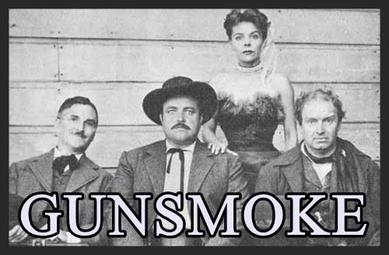
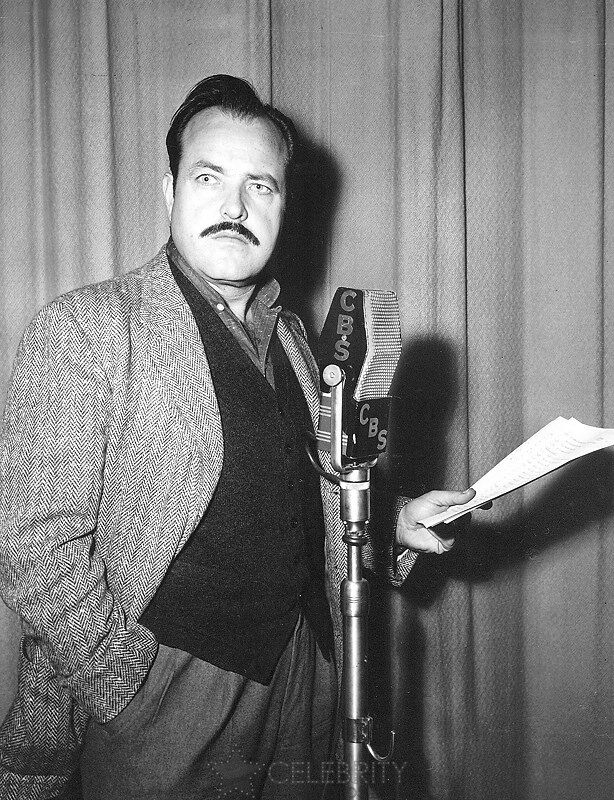
Gunsmoke debuted on the CBS Radio airwaves on April 26, 1952, with the episode “Billy the Kid”. The show starred William Conrad as Marshal Matt Dillon, Howard McNear as Doc Charles Adams, Georgia Ellis as Kitty Russell, and Parley Baer as Dillon’s assistant, Chester Wesley Proudfoot. The series ran on CBS radio for nine years, ending in June of 1961. Writer John Dunning notes, “The show drew critical acclaim for unprecedented realism.”
In the early stages of development, the lead character was known as Marshal “Mark” Dillon, with a pilot episode being titled “Mark Dillon Goes to Gouge Eye”. Actor William Conrad was a popular and steadily working radio actor of the time, and although it was at first believed that he may be overexposed, after auditioning only a few lines for the producers, it was clear that Conrad’s voice was the one for the role. He portrayed Dillon as a lonely, isolated man, toughened by a hard life on a lawless frontier. Norman Macdonnell would later remark that, “. . . much of Matt Dillon’s character grew out of Bill Conrad.”
With the success of Gunsmoke on the radio, it wasn’t long before there was talk of adapting it for television. Producer Macdonnell was hesitant, declaring that, “our show is perfect for radio. Gunsmoke confined by a picture could not possibly be as authentic or attentive to detail.” But CBS moved forward with the TV development anyway.
Although the radio cast members were given auditions, the TV roles were eventually filled by new actors. William Conrad’s corpulence has been cited as the main reason he was not considered for the small screen adaptation, but all of the primary roles were given to newcomers. John Dunning wrote, “That radio fans considered the TV show a sham and its players impostors should surprise no one.”
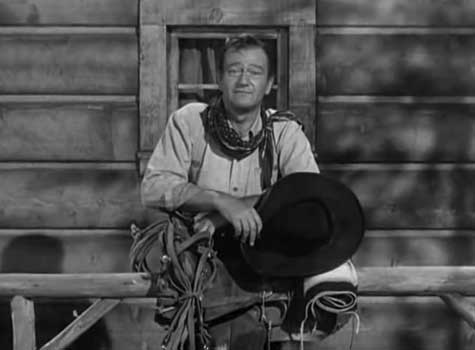
Early on there were rumors that John Wayne had been offered the TV role of Marshal Dillon. This was never true, as Wayne was one of the biggest box-office draws of the period, and would never sacrifice his big-screen career for the fledgling medium of television. What is true is that when Gunsmoke made its CBS Television debut on September 10, 1955, the episode was prefaced by an introduction from “Duke” Wayne himself (see video link at end of post). Wayne introduces James Arness as the man who will portray Matt Dillon and predicts that the towering actor (6’7”) will have a very successful career. Prescient words indeed, as over the series’ 20 yr span Arness was the only cast member to appear in all 635 episodes, as well as the subsequent TV movies.
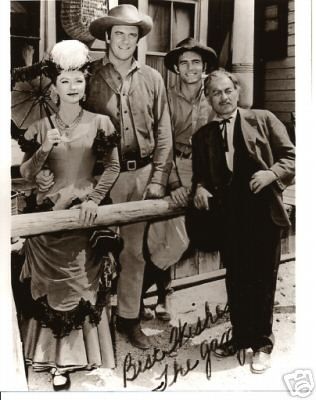
Joining Arness in the primary roles of the TV cast were Amanda Blake (Miss Kitty), Milburn Stone (“Doc” Adams), and Dennis Weaver (Chester Goode).
From 1955 to 1961, Gunsmoke was presented in a half-hour format, after which it was extended to one hour. Beginning in 1966 the show was broadcast in color.
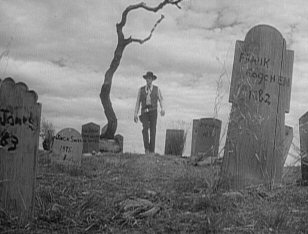
As the show had been developed for an adult audience, some early episodes opened with Marshal Dillon striding through the headstones of “Boot Hill”, gazing across toward the environs of Dodge City. Through a voice-over monologue, the peacekeeper would characterize his role in bringing law and order to a new frontier. One such monologue is from a season 1 episode entitled “The Hunter”:
“Law comes hard to a young country . . . especially out here on the frontier. I know just how hard: I’m Matt Dillon, US Marshall; I’m out of Dodge City. It’s a roaring town, filled to overflowing with cowmen, gamblers, buffalo hunters . . . and killers.
And this is Boot Hill. There aren’t many tears lost for these men lying here; not back there in Dodge. Most men can look at the result of their job and say, ‘I did that pretty well, the best I knew how’, and they can be proud of their handy work. But not me, because part of this is my handy work; I’ve put some of these men here. I take no pride in killing; it’s just that sometimes it’s a part of my job – a job that has to be done.”
“I might of had a sidekick with a funny name
Runnin’ wild through the hills chasin’ Jesse James
Ending up on the brink of danger
Ridin’ shotgun for the Texas Rangers” – Should’ve Been a Cowboy (Keith)
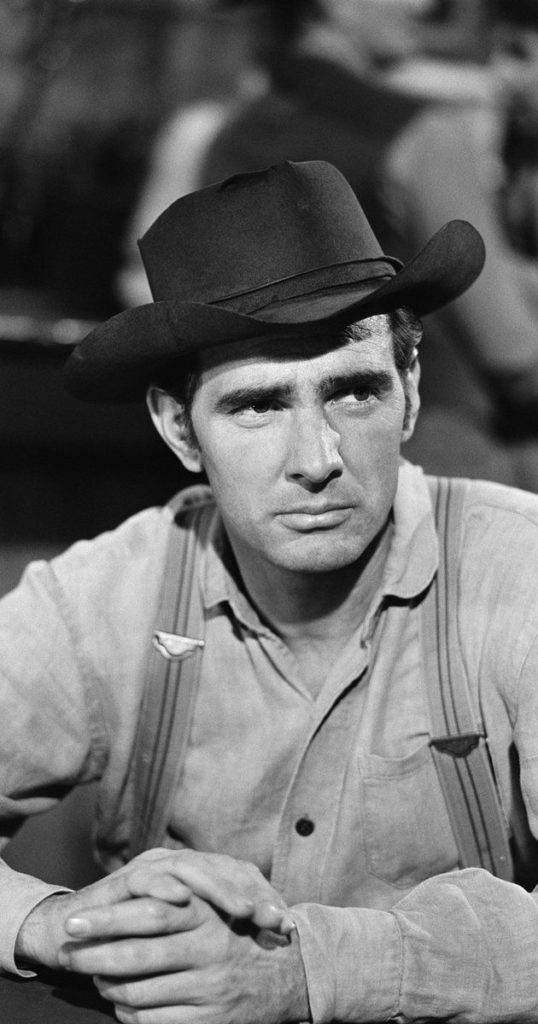
Dennis Weaver 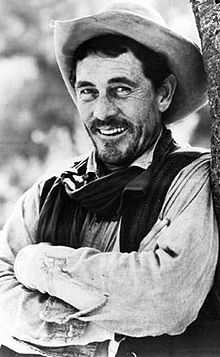
Ken Curtis 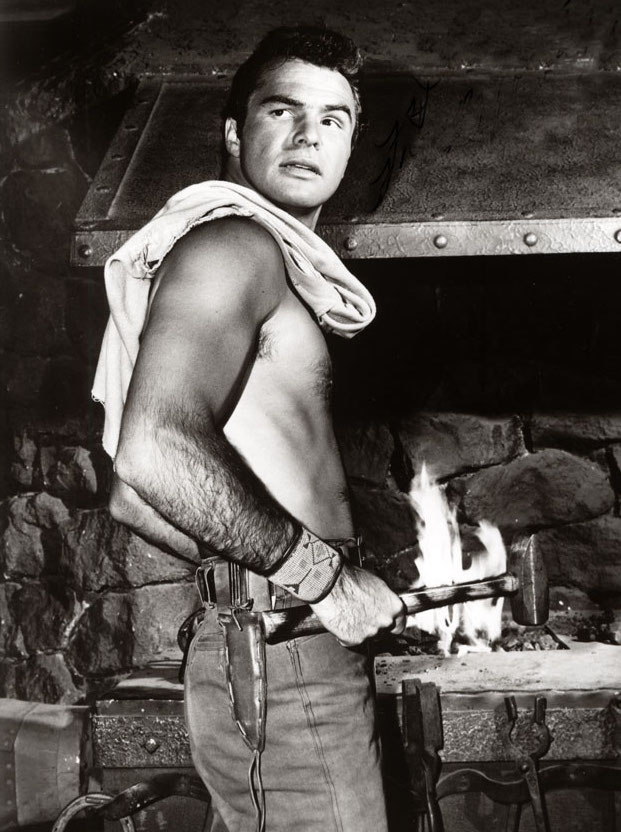
Burt Reynolds
Over the show’s twenty-three year span Matt Dillon had a number of sidekicks with funny names, beginning with Chester Proudfoote/Goode, played by Parley Baer on radio and Dennis Weaver on TV. Weaver’s character, which he played through the 1963 season (290 episodes), sported a limp from a Civil War injury, an aspect of the role that Weaver claimed became somewhat tedious over the span of nine seasons. Later sidekicks were Festus Haggen, an illiterate hillbilly played by Ken Curtis (306 episodes), and “halfbreed” blacksmith Quint Asper, played by Burt Reynolds (50 episodes). One 1964 episode, “Prairie Wolfer”, included all three actors playing their respective sidekick roles.
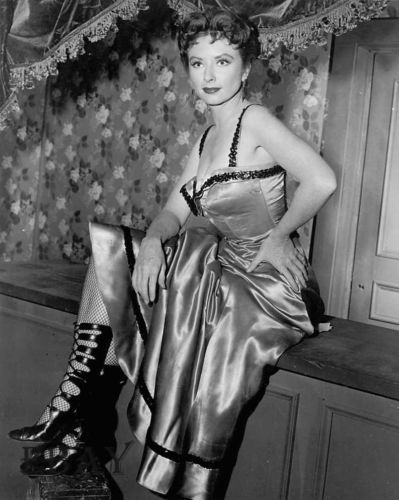
Amanda Blake portrayed Miss Kitty Russell for nearly the entire 20-year span (569 episodes) of the show. Being part-owner of the Long Branch Saloon kept her in Dodge City, and though she was frequently shown in Matt Dillon’s company, she had clearly resigned herself to never being much more than a cherished friend of the stalwart lawman. In one episode she is heard to remark, “Matt Dillon’s a man with no strings on him. Let’s just say he’s more mine than anybody else’s.” And any devoted fan of the show knows that she would indeed have “Yes” in a New York minute.
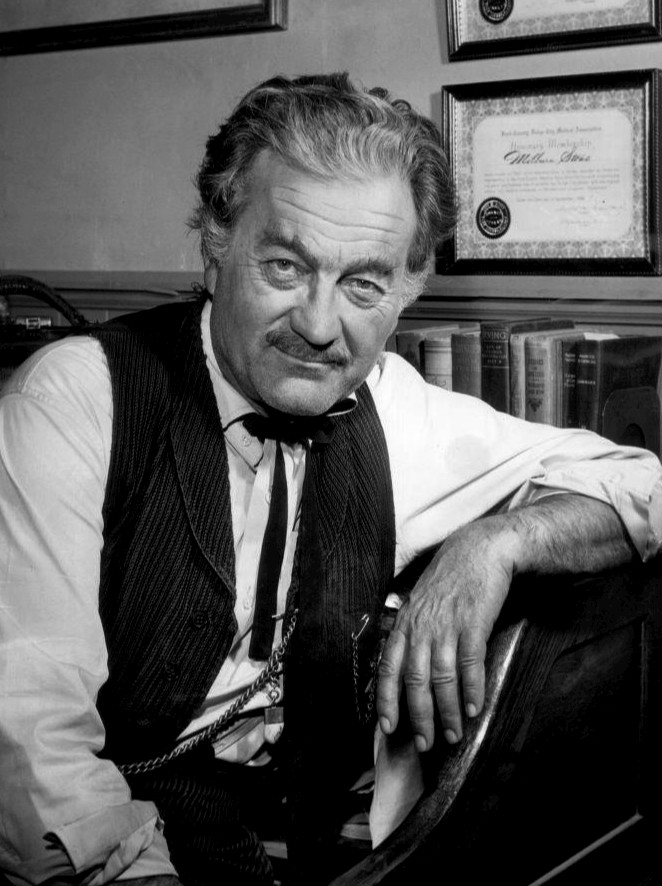
The character with nearly as much longevity as Matt Dillon was that of “Doc” Adams, played by Milburn Stone (605 episodes). In addition to being the sole health care provider for the bustling frontier town of Dodge City, with a job description that included patching up numerous gunshot and stab wounds, he was also a sounding board for the Marshal, imparting his wisdom, and displaying clear frustration at times when his sage advice to the lawman went unheeded, but remaining loyal to the end.
“Go west young man, haven’t you been told?
California’s full of whiskey, women, and gold
Sleepin’ out all night beneath the desert stars
With a dream in my eye and a prayer in my heart” – Should’ve Been a Cowboy (Keith)
From 1957 – 1961, Gunsmoke was the number-one show on television, its popularity dipping slightly when the show’s format was expanded to one hour. In 1967, the show’s 12th season, CBS planned to cancel Gunsmoke, but the story has been told that after pressure from his wife (Babe Paley), William S. Paley chose to cancel Gilligan’s Island instead.
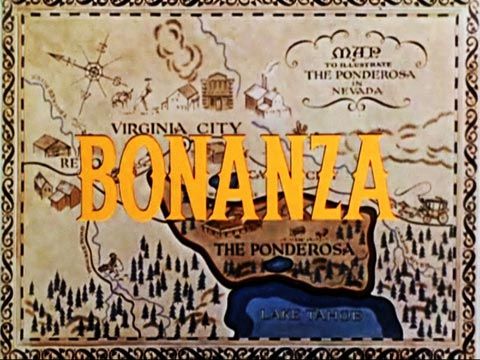
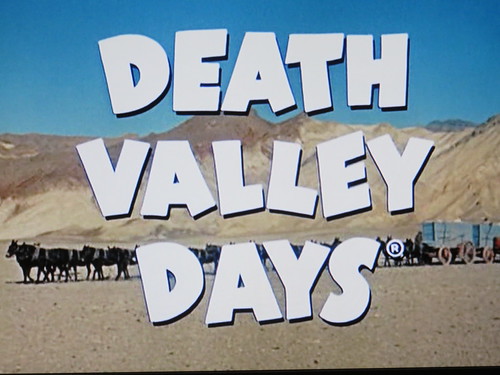
Gunsmoke held the title of television’s longest-running, primetime, live-action series for decades, only to be surpassed in September 2019, when Law & Order: Special Victims Unit began its 21st season. During the 1950s & 1960s – the Golden Age of TV westerns – dozens of shows with western themes were broadcast on the three major networks, but most came & went during Gunsmoke’s tenure. Only Bonanza (403 episodes) & Death Valley Days (452 episodes) came close to matching the exposure of Marshal Dillon & the characters of “Dodge”.
All 635 episodes of the television series, and almost all 480 episodes of the radio show, still exist. The TV version of the show remains popular in syndication, and just the other day I passed a freeway billboard featuring a larger than life-size rendering of James Arness in his US Marshal garb with the caption “Matt”, and a listing for local broadcast time.
At the end of its run in 1975, Los Angeles Times columnist Cecil Smith wrote: “Gunsmoke was the dramatization of the American epic legend of the west. Our own Iliad and Odyssey, created from standard elements of the dime novel and the pulp Western as romanticized by Buntline, Harte, and Twain. It was ever the stuff of legend.”
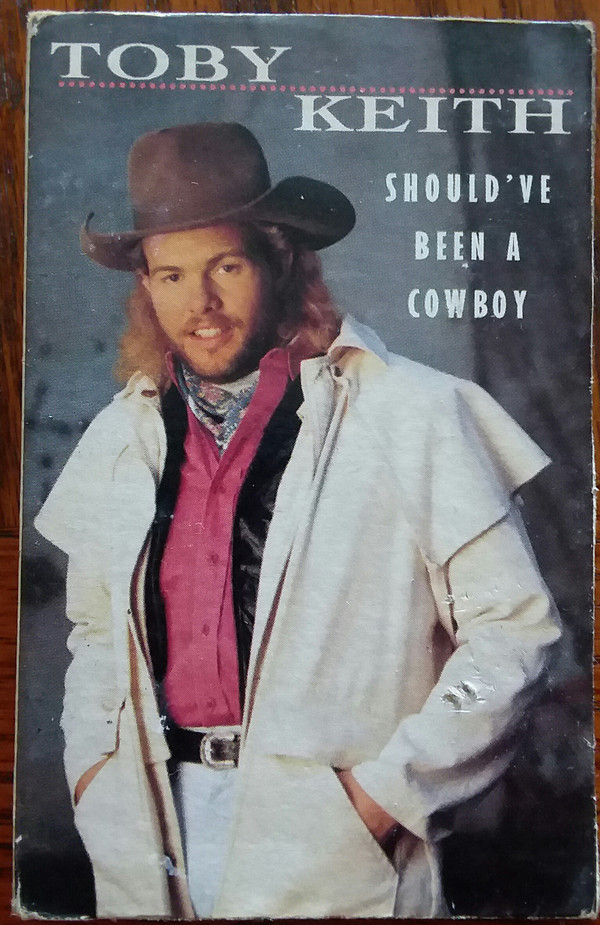
How the show has influenced younger generations is readily evident in this post’s featured song, “Should’ve Been a Cowboy”, which was the first single from Toby Keith’s debut album in 1993, and became his first #1 hit months later. Keith’s recording – after more than 3 million air plays – has also been acknowledged by radio as the most played country song of the 1990s
While Matt will never “pop the question”, and Miss Kitty will never get to say “Yes” in a New York minute, Dodge City, Kansas will forever enjoy the law & order provided by good old faithful Marshal Dillon, as long as there are reruns airing on television somewhere.
“I should’ve been a cowboy
I should’ve learned to rope and ride
Wearin’ my six-shooter, ridin’ my pony on a cattle drive
Stealin’ the young girls’ hearts
Just like Gene and Roy
Singin’ those campfire songs
Woah, I should’ve been a cowboy” – Should’ve Been a Cowboy (Keith)
Coming May 18 @ A Cowboy Song: Big Iron
Sources:
https://en.wikipedia.org/wiki/Gunsmoke
https://en.wikipedia.org/wiki/William_S._Paley
https://en.wikipedia.org/wiki/Should%27ve_Been_a_Cowboy
All photos sourced through internet searches, none belong to the author.
]]>Singin’ the same old song
I know every crack in these dirty sidewalks of Broadway
Where hustle’s the name of the game
And nice guys get washed away like the snow and the rain” – Rhinestone Cowboy (Larry Weiss) © Warner Chappell Music, Inc
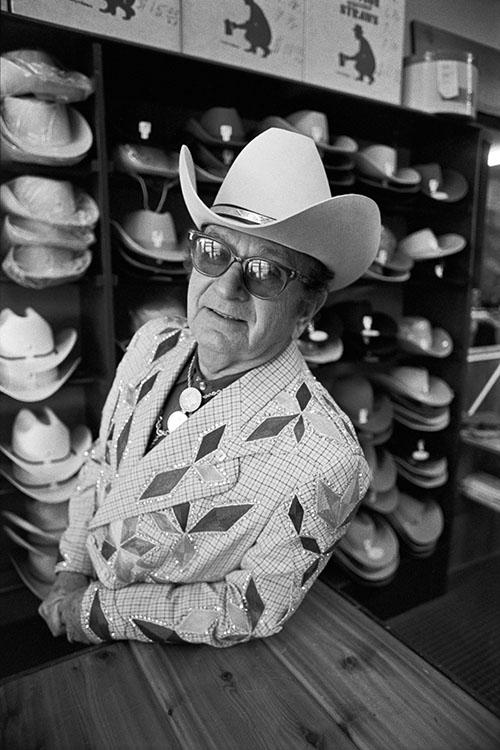
“You don’t have to have cows to be a cowboy” – Nudie Cohn
Nuta Kotlyarenko was born in Kiev on December 15, 1902, to a Ukrainian Jewish family. At the age of 11, he was sent by his parents to the United States along with his older brother Julius, to escape the anti-Semitism and pogroms of Czarist Russia.
Arriving with his brother at Ellis Island, his difficult to pronounce Eastern European name was soon transformed into the moniker that would become his brand – Nudie Cohn.
Settling into New York City, where they had family, Julius was busy getting acquainted with girls, while Nudie passed his time watching Western films in theaters throughout the city.
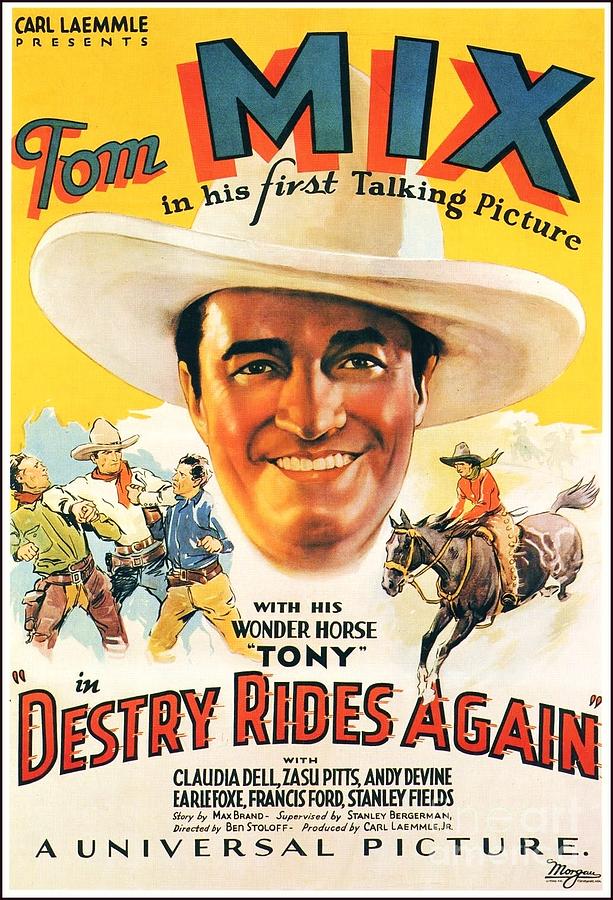
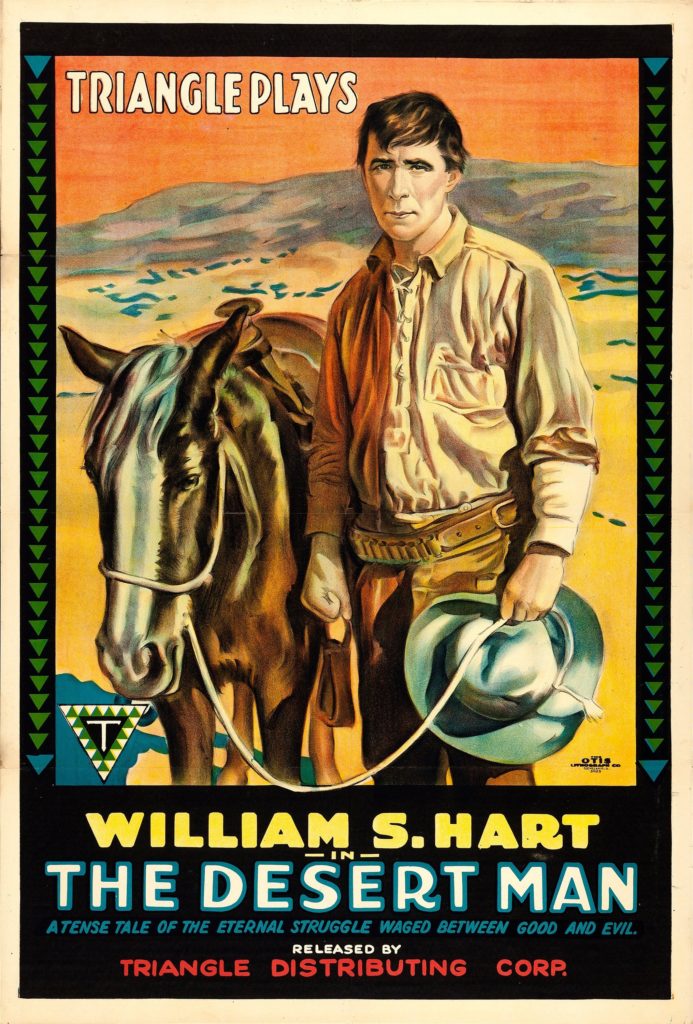
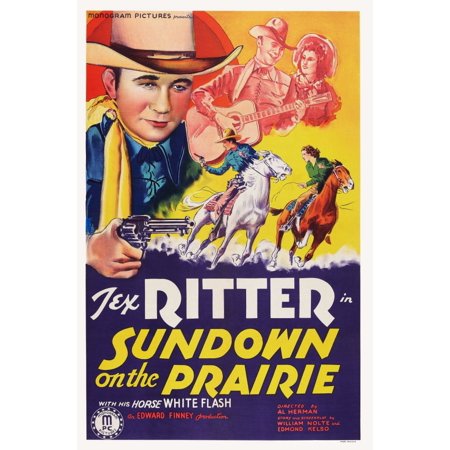
At age 16, after working as a shoe-shine boy, and trying his hand at other occupations, Nudie traveled to California to become a boxer, known briefly as “Battling Nudie”. Not finding great success as a pugilist, he took bit parts in movies, and having acquired sewing skills from his bootmaker father, he produced made-to-order outfits. Actress Gloria Swanson was one of his first customers.
In 1928, Cohn set about hitchhiking back to New York, to visit his family.
During a stopover at a boarding house in Mankato, Minnesota, Nudie met Helen Barbara Kruger, whose parents owned the establishment. They soon fell in love and were married in 1934.
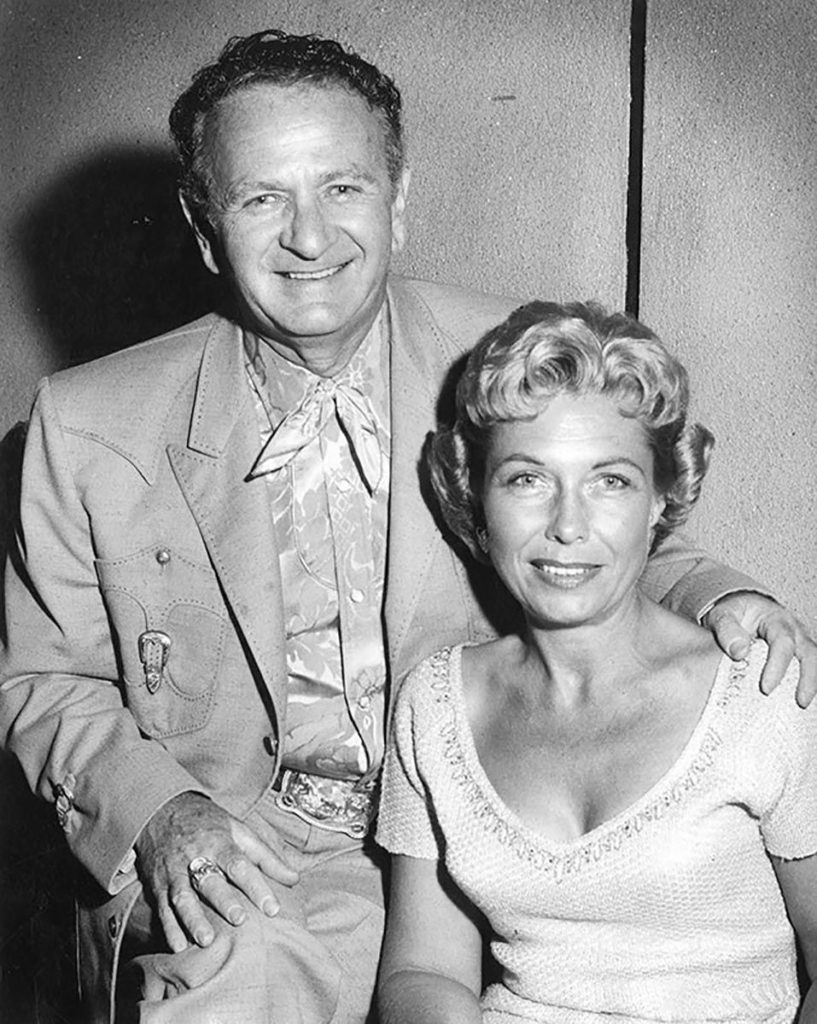
Along with his new bride – whom Nudie took to calling “Bobbie” – he returned to his family and his roots in New York City, where together they opened their first business. Calling their new enterprise, “Nudies for the Ladies”, they worked as a team stitching sequined & bejeweled G-strings & undergarments for the many burlesque & vaudeville performers in the city.
In the early 1940s, Nudie & Bobbie moved to California, where they began designing and manufacturing clothing in their garage.
“There’s been a load of compromisin’
On the road to my horizon
But I’m gonna be where the lights are shinin’ on me” – Rhinestone Cowboy (Weiss)
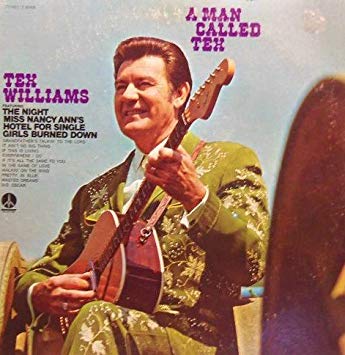
In 1947 Cohn struck a deal with a struggling young country singer named Tex Williams: If Williams would use the proceeds from an auctioned horse to buy Cohn an embroidery machine, Cohn would make Williams a suit of clothes at no cost. It was not long before all the up & coming stars of Country & Western were seeking out Nudie & Bobbie’s creations.
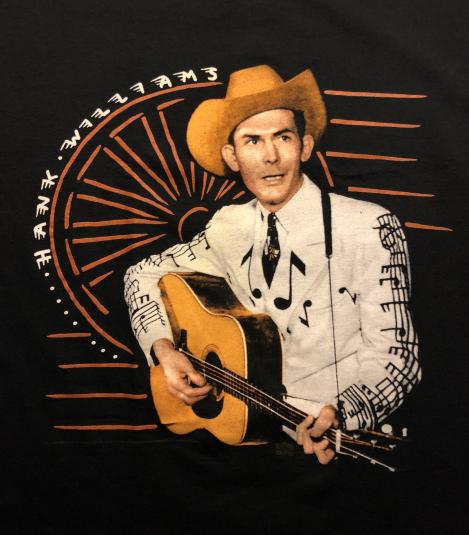
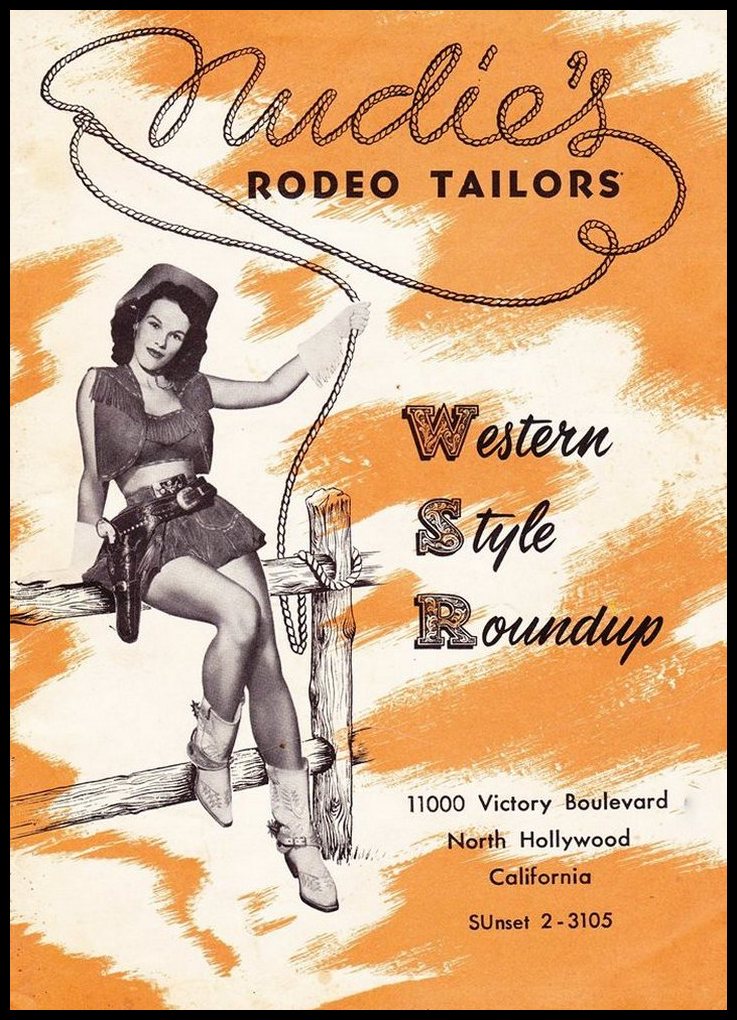
As business increased, the Cohn’s needed more space and opened their first shop on the corner of Victory and Vineland in North Hollywood. Having christened their new shop, “Nudie’s of Hollywood”, their customers included Spade Cooley, Cliffie Stone, Porter Wagoner, Gene Autry, and Hank Williams.
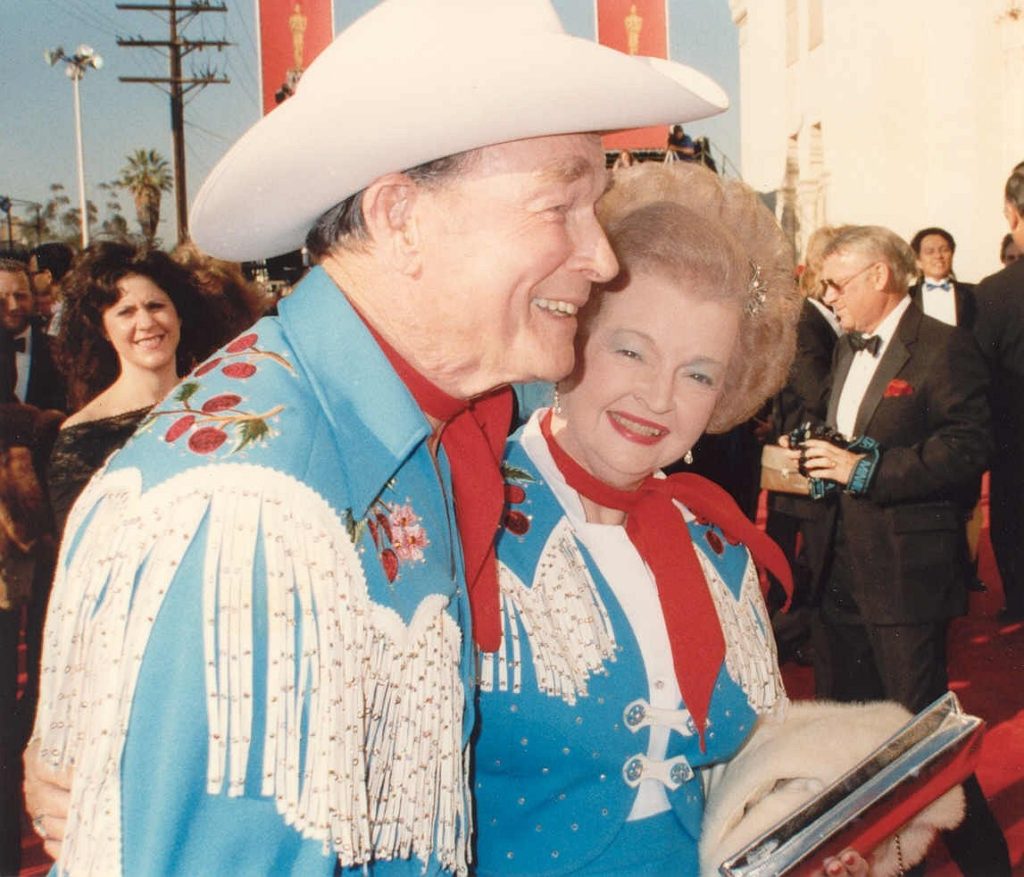
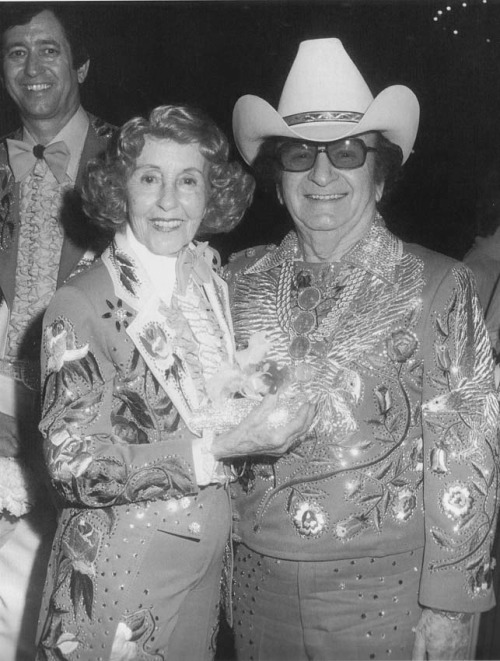
In the early ’50s they took a chance and approached Roy Rogers and Dale Evans, and eventually became their custom tailors. Besides being two of their highest-profile clients, Roy & Dale also became life-long friends. Soon the Cohn’s flashy creations were visible every week to television viewers of The Roy Rogers Show.
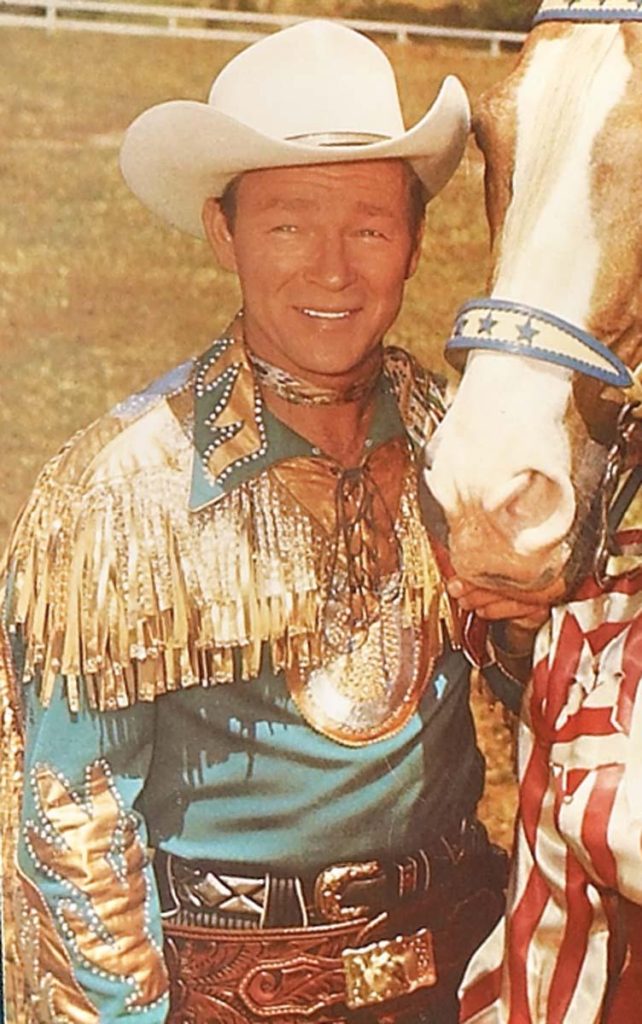
Nudie’s granddaughter Jamie relates the story of an early encounter between Roy & Nudie:
“Roy had said to him, ‘Listen I’ve heard about you around town and I want something for when I play at Madison Square Garden, so that the kid in the nosebleed section can see me on stage,’” recounts Jamie.
“So my grandpa comes up with the idea of adding fringe to the shirt, and on every piece of fringe, he put rhinestones all the way down and that became the signature of Roy Rogers.”
“Like a rhinestone cowboy
Riding out on a horse in a star-spangled rodeo
Like a rhinestone cowboy
Getting cards and letters from people I don’t even know
And offers comin’ over the phone” – Rhinestone Cowboy (Weiss)
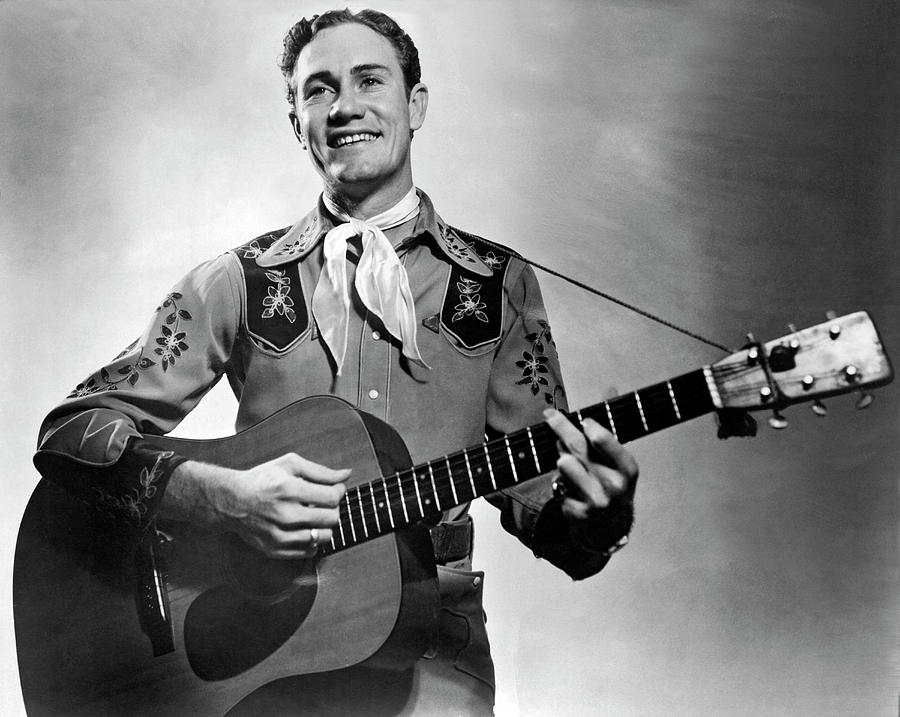
Another high profile client that helped cement the Cohns’ reputation throughout the country music community and beyond was Lefty Frizzell. When the singer approached Cohn in 1957 to help him stand out on a crowded bill, the tailor told him, “Lefty if you’ve got the guts to wear it, and it’s a hit, you can pay me for it.” He decorated both suit lapels with Frizzell’s initials in blue rhinestones and the singer’s trademark was born.
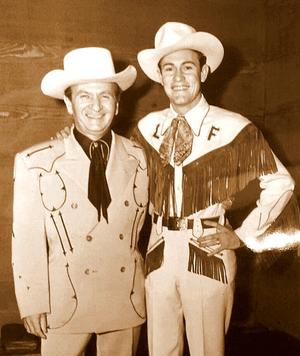
Early movie & television cowboys (and cowgirls) were already well known for their flamboyant style of dress, and Nudie Cohn’s creations took the ostentation to unprecedented levels with his liberal use of rhinestones, sequins, appliques and bright images embroidered on his one-of-a-kind outfits. Many of Cohn’s patrons would soon become identified by their “themed” Nudie suits, and you can bet that if an artist happened to be headlining the Grand Ole Opry, they were most likely doing it in one of Cohn’s custom creations.
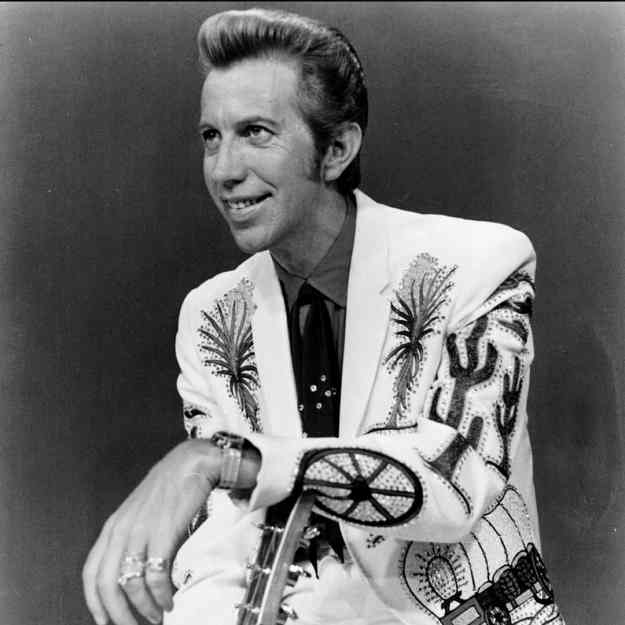
Porter Wagoner 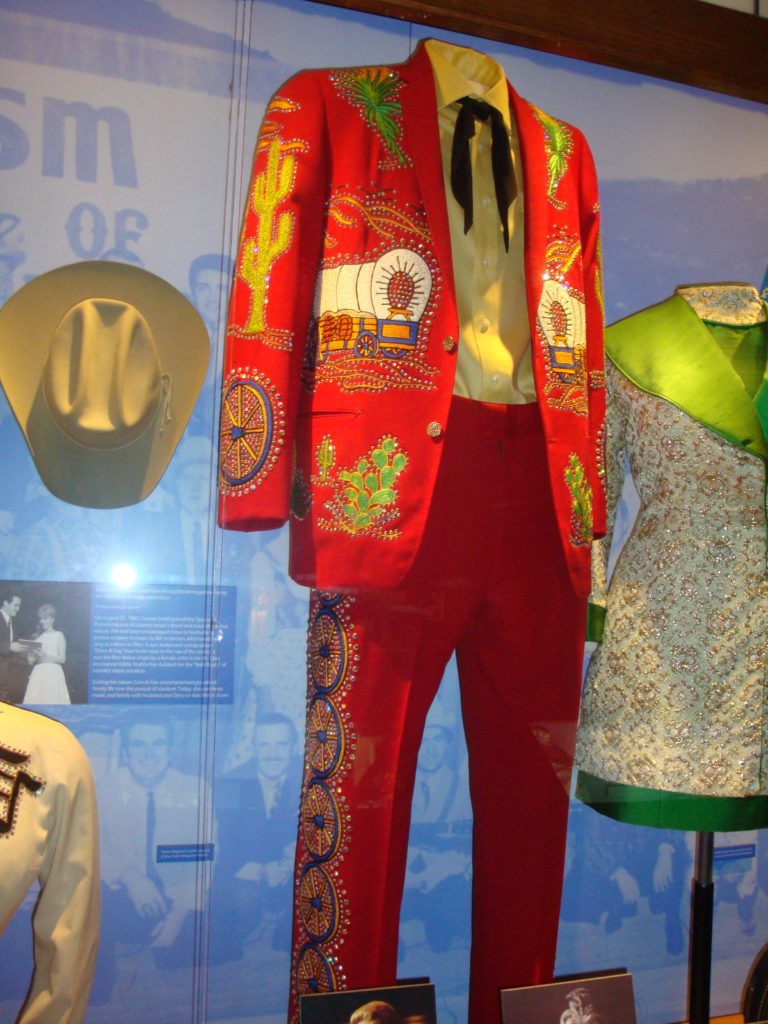
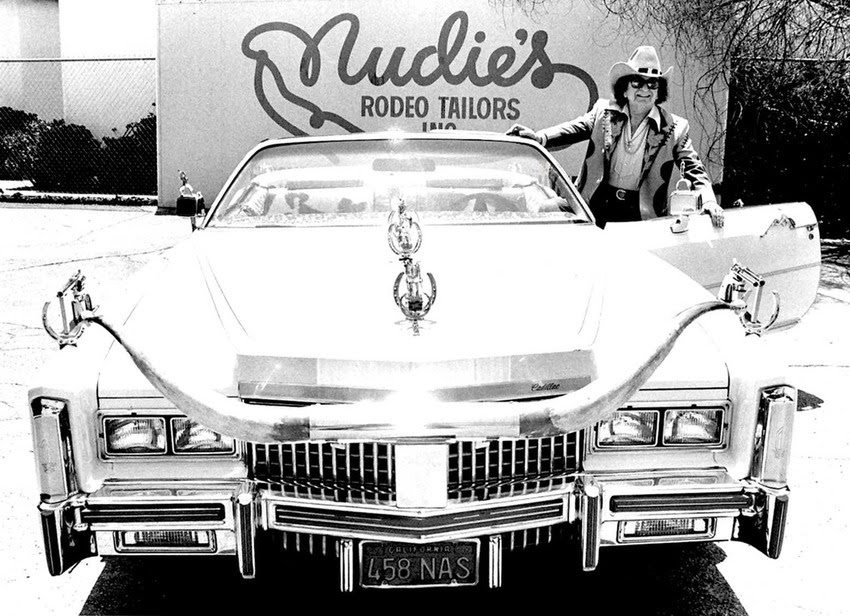
In 1962, for singer Porter Wagoner, Cohn crafted a peach-colored suit bedazzled with rhinestones and stitched with a covered wagon on the back of the coat, and wagon wheels on the pants legs. Believing that the value of the exposure that the popular artist would bring to his design would be immeasurable, he offered the suit to Wagoner for free. Cohn was proven to be correct in his expectation, and his reputation and renown soared. By 1963 the Cohn’s were moving to a larger location, renaming the operation, “Nudie’s Rodeo Tailors”.
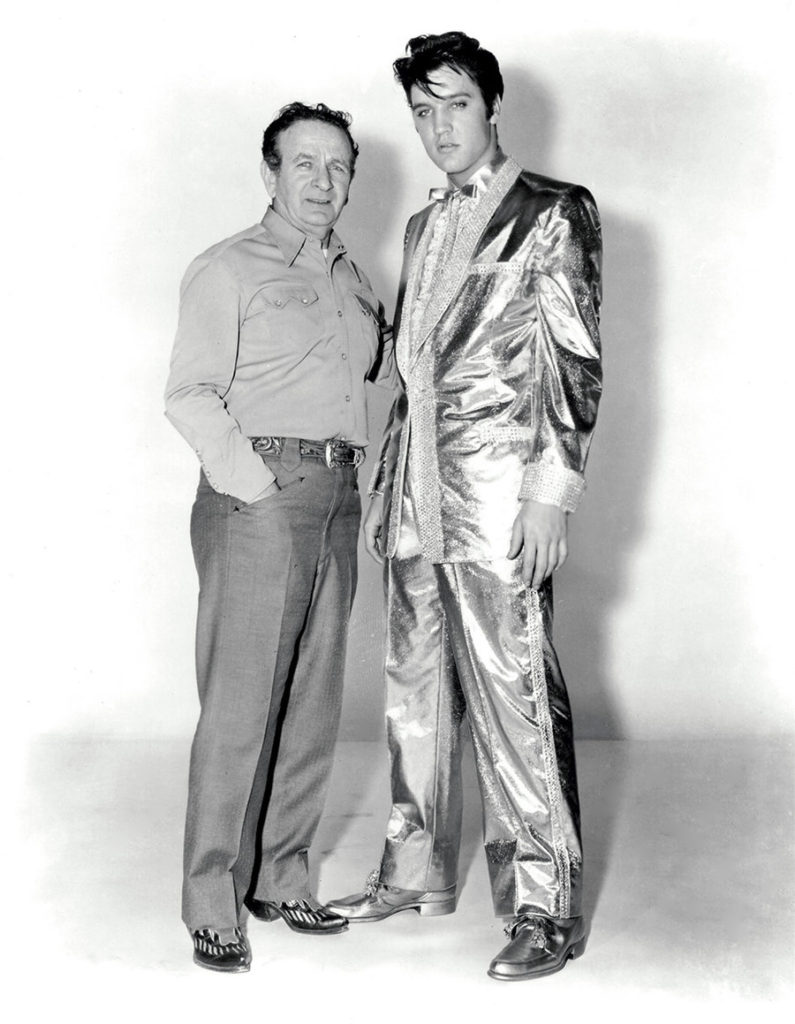
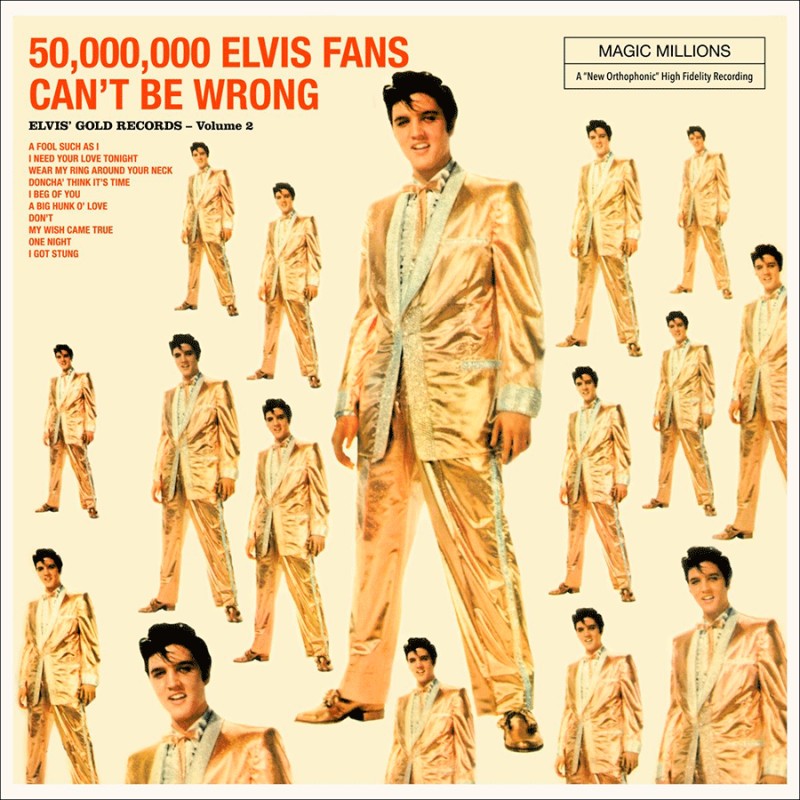
Perhaps one of Nudie Cohn’s most well-known suits is the gold lamé tuxedo that Elvis Presley donned for the cover of his LP, 50,000,000 Elvis Fans Can’t Be Wrong – Elvis’s Gold Records – Volume 2, released in November 1959. Elvis’ manager, Col. Tom Parker had come up with the idea for a special gold suit for his young phenom in 1956. Parker had become friends with Cohn several years earlier, through Parker’s association with singer Hank Snow – an early client of Cohn’s – and commissioned the garment for Elvis. Although the ensemble would become known as the “Famous $10,000 Gold Lamé Suit”, Nudie would later joke that $9,500 was pure profit, and the actual bill of sale for the suit was for $2,500.
“Well, I really don’t mind the rain
And a smile can hide all the pain
But you’re down when you’re ridin’ the train that’s takin’ the long way
And I dream of the things I’ll do
With a subway token and a dollar tucked inside my shoe” – Rhinestone Cowboy (Weiss)
As one era led into another, Nudie’s clientele began extending beyond the rank & file of Country & Western stars and included some of the biggest names in show business: John Wayne, Elton John, John Lennon, Cher, Chicago, ZZ Top, the Rolling Stones, Mike Nesmith, Ronald Reagan, Robert Mitchum, Pat Buttram, Tony Curtis, Michael Landon, Glen Campbell, Eric Clapton, Steve McQueen, Johnny Cash, America, The Flying Burrito Brothers, and David Lee Roth, among others. Nudie also created the costumes worn by Robert Redford in the film, The Electric Horseman.
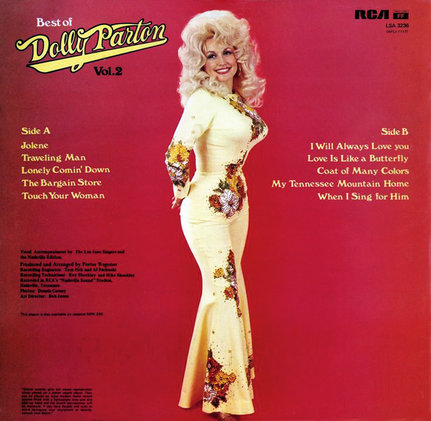
Dolly Parton 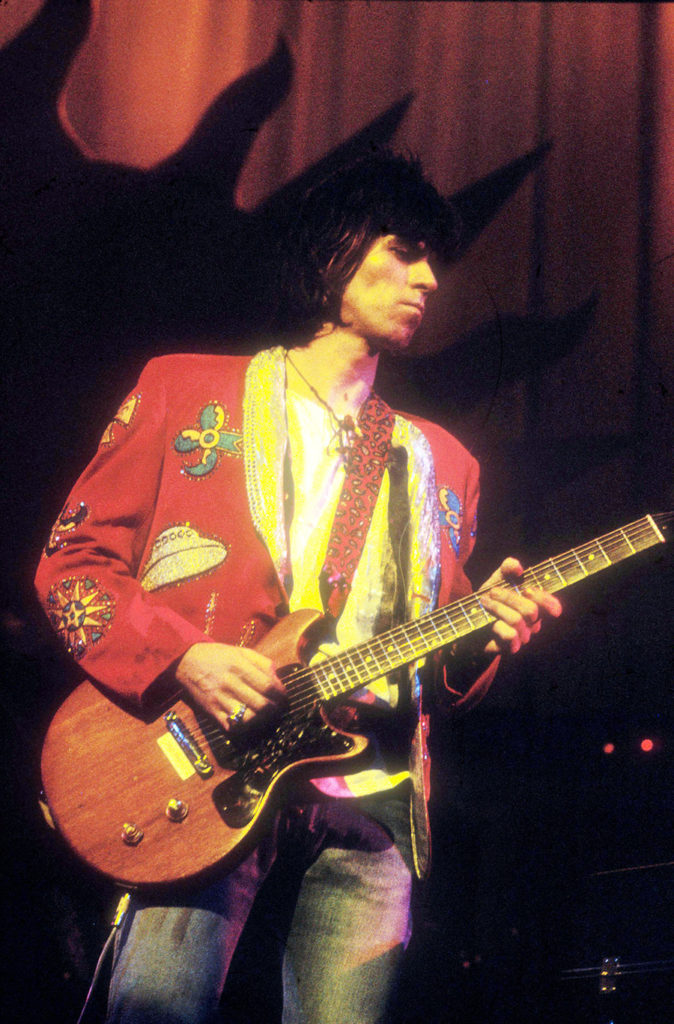
Keith Richards 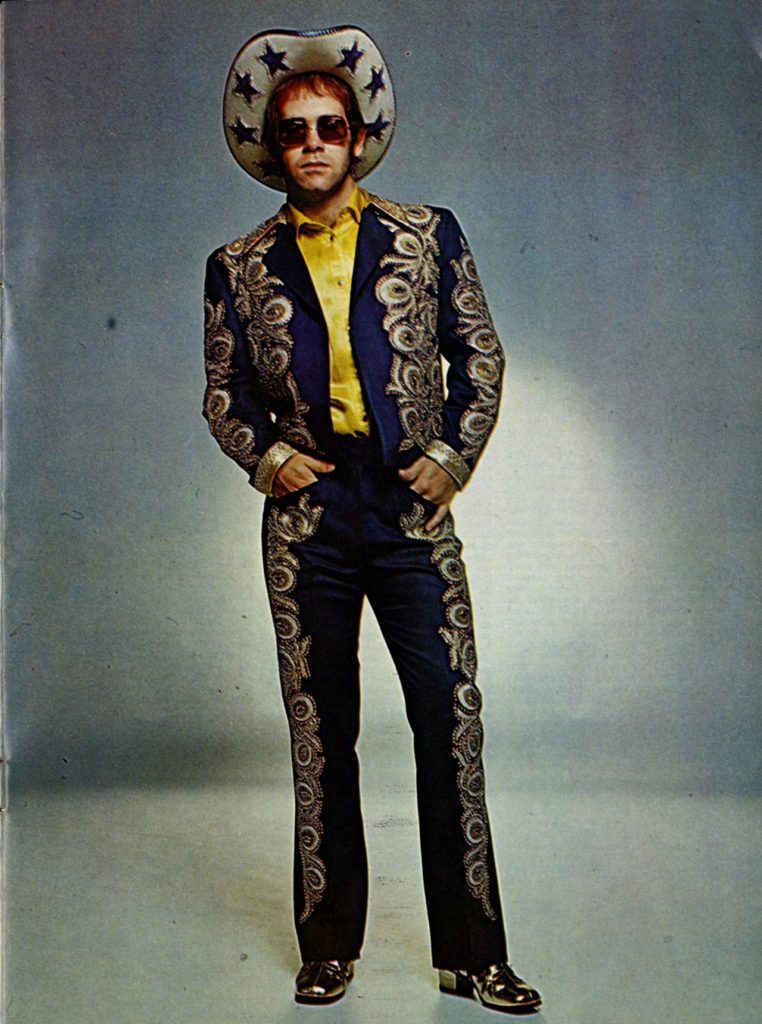
Elton John 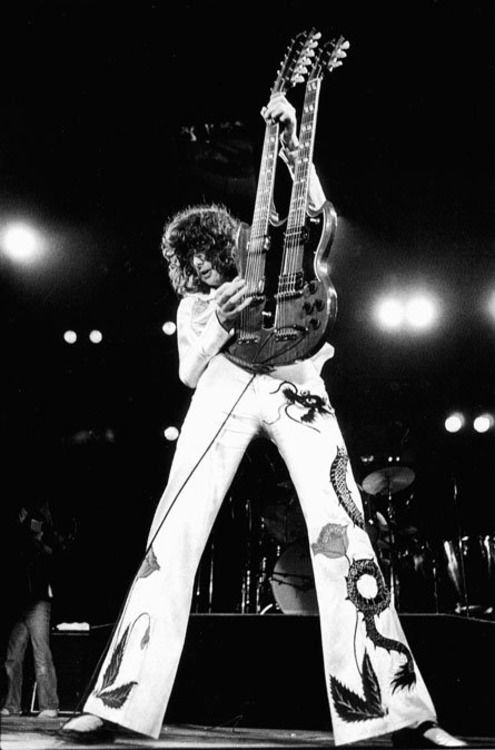
Jimmy Page 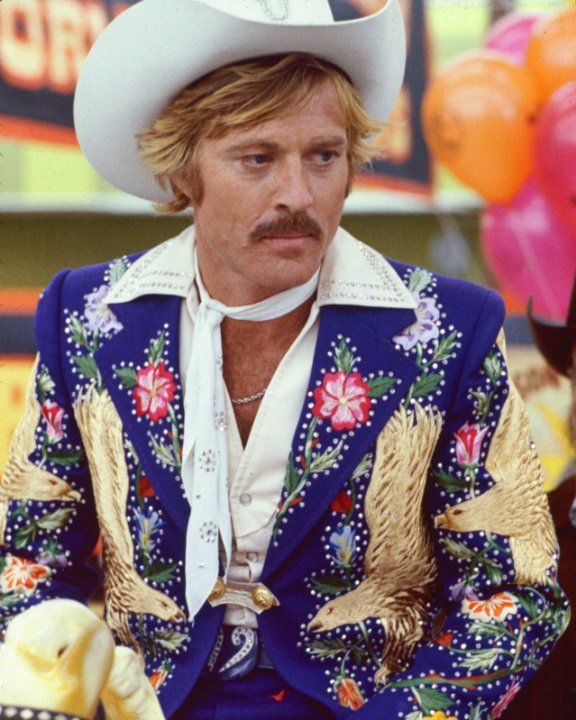
Robert Redford 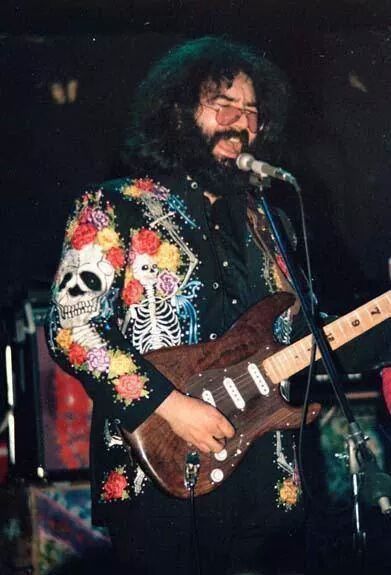
Jerry Garcia
In 1969, Nudie Cohn was featured on the cover of Rolling Stone magazine. In the accompanying interview he stated:
“My impression of an entertainer is, he should wear a flashy outfit to be fair to the public. He shouldn’t be wearing a sport coat like the people in the audience. The costume is the first impression and it should be flashy.”
He explains that he developed this attitude when he was a youngster, shining shoes outside New York’s Palace Theatre, the Carnegie Hall of the Vaudeville circuit.
As changing times gave way to evolving tastes in entertainment and popular music, Cohn commented, “My costumes used to be called corny, now they call us mod. I don’t care. Country music has took over rock and roll. Doesn’t matter to me who buys clothes. Whatever does the best.”
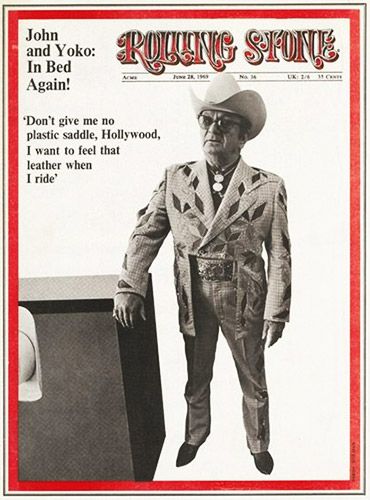
For adorning the cover of the then counter-culture magazine, Rolling Stone gives context to Cohn’s notoriety by stating in the article:
Not only does Nudie claim to dress 80 percent of all movie and television western stars (from Hopalong Cassidy to Lorne Green), he also is reputed to control about three-quarters of the other tailor-made western clothing business in the U.S., outfitting Porter Wagoner, Jimmy Dean, Audie Murphy, Roy Rogers and perhaps a hundred other stars, as well as thousands of reg’lar folks. All of which helps Nudie stuff an estimated $500,000 a year into his sequined saddlebags. For his excellence at his art, Nudie was recently presented a special award by the Academy of Country and Western Music.
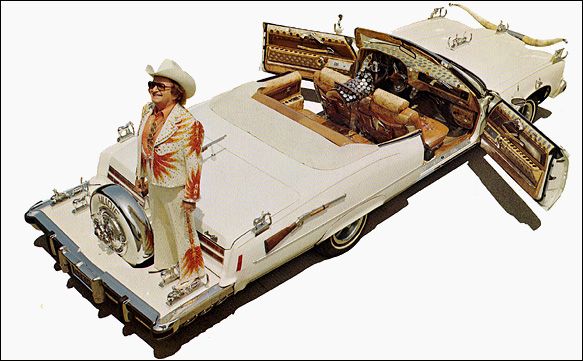
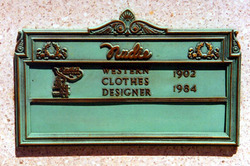
Nudie Cohn died in 1984 at the age of 81. His eulogy was delivered by Dale Evans. Nudie’s Rodeo Tailors continued to do business under the ownership of Nudie’s widow Bobbie and granddaughter Jamie but closed in 1994. Bobbie passed away in 2006, at the age of 92. She is buried with her husband at Forest Lawn Memorial Park (Hollywood Hills).
“There’ll be a load of compromisin’
On the road to my horizon
But I’m gonna be where the lights are shinin’ on me” – Rhinestone Cowboy (Weiss)
In 2006, Porter Wagoner said he had accumulated 52 Nudie suits, each costing between $11,000 and $18,000, since receiving his first free outfit in 1962. The Belgian entertainer Bobbejaan Schoepen was a client and personal friend, with a collection of 35 complete Nudie outfits which is believed to be the largest in Europe. Other Nudie suits are on display in various museums, while some are still worn on occasion.
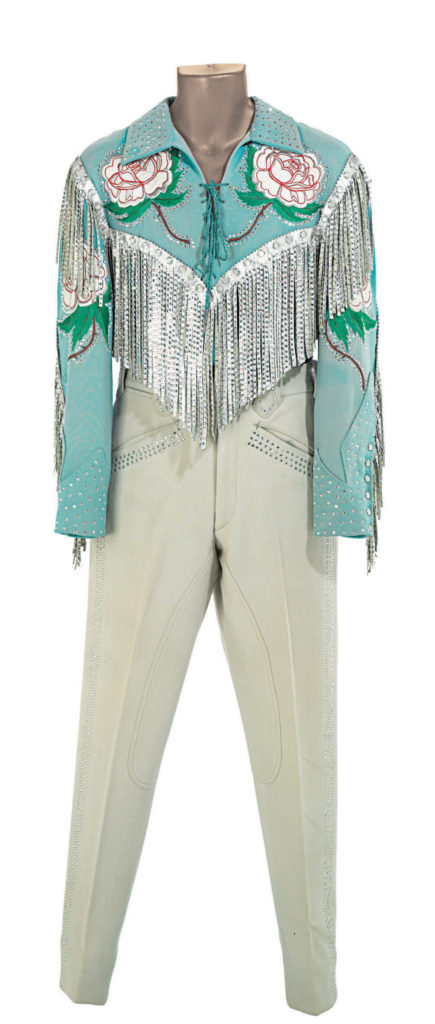
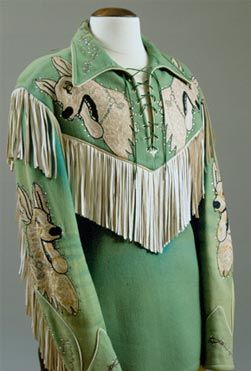
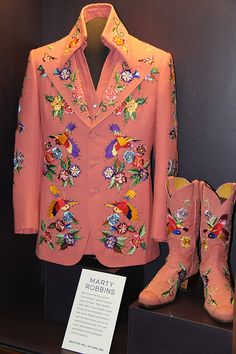
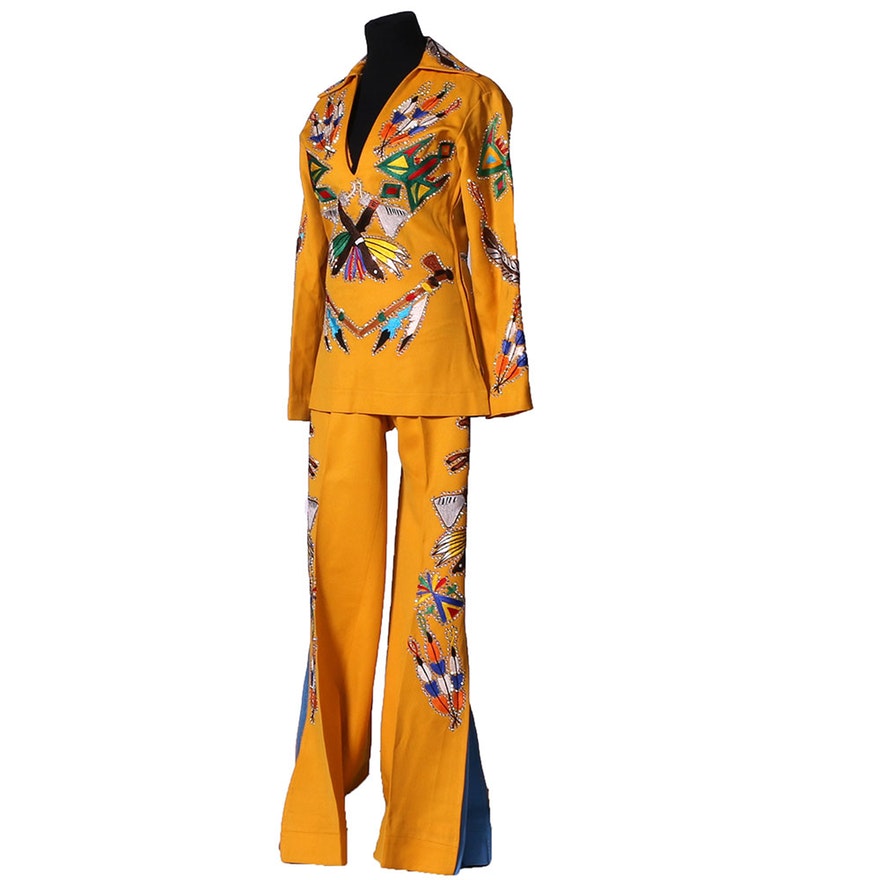
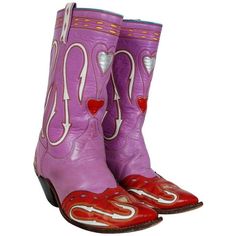
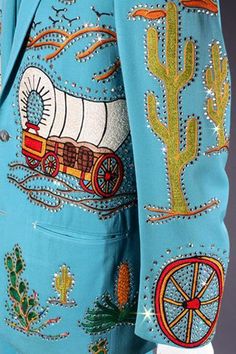
A new generation of designers carries on the “Nudie” tradition with their own flashy creations that pay homage to a legendary American original.
Jamie Nudie keeps the memory of her grandparents alive with a website featuring T-shirts and other merchandise and has licensed the Nudie name to Nudie’s Honky Tonk in Nashville, Tennessee, where one of Nudie’s customized automobiles hangs above the stage.
“Like a rhinestone cowboy
Riding out on a horse in a star-spangled rodeo
Like a rhinestone cowboy
Getting cards and letters from people I don’t even know
And offers comin’ over the phone” – Rhinestone Cowboy (Weiss)
Coming April 20 @ A Cowboy Song: Il Buono, Il Bruto, Il Cativo
Sources:
https://en.wikipedia.org/wiki/Nudie_Cohn
https://www.gq.com/story/nudie-suit-legacy
All photos sourced through internet searches, none belong to the author.
]]>